

Heavy Weather is an IoT platform for weather monitoring. This project includes everything from firmware to frontend dashboard.
What makes it different is that it was designed for small scale, without compromising on security, availability, or cost efficiency. It can also scale without changes to firmware or data structure.
Architecture serves three constraints:
- Dashboards must load instantly, regardless of how much data exists.
- Operational costs at low data volume should also be low.
- Weather data cannot be lost.
Every structural decision flows from those.
The shape of the system
Section titled “The shape of the system”There are 4 distinct layers to this system:
- Device - an ESP32 microcontroller that sends weather data.
- Cloud - serverless services that receive the data from devices.
- Application - API server which serves user requests.
- User - owner of the device.


The cloud never initiates contact with anything. Devices push data in and go back to sleep. Users pull data out through the application.
You might wonder why the application isn't simply part of the cloud. The answer is cost. While cloud services are highly available (important requirement for weather data), they are also expensive to keep running. Everything that doesn't have to be in cloud, is handled by what I call "application" or an API server for user.
Complex writes, easy reads
Section titled “Complex writes, easy reads”Weather data by its nature accumulates forever. A single station reports every 30 minutes, giving us 17520 readings a year. Saving all of this data is not a problem, but reading it quickly is the biggest problem users will feel (slow dashboard).
Heavy Weather solves this issue by trading write complexity for read performance. Every incoming measurement is merged into buckets on write.
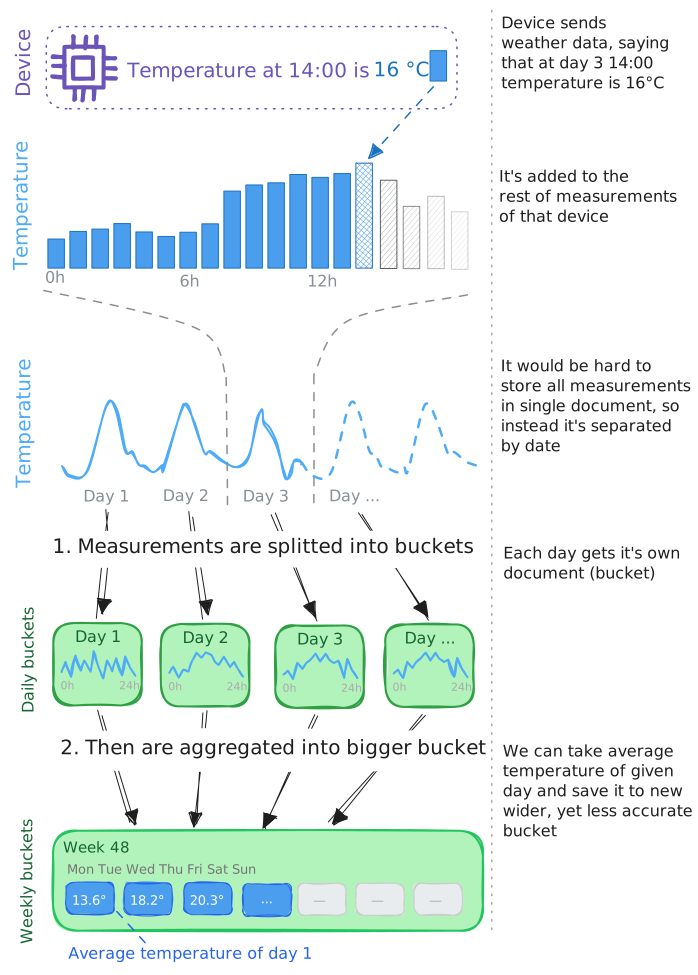
There are three types of aggregates: daily, weekly, and a special "latest" bucket. Daily and weekly are the main ones. This pre-aggregation makes reads simple. User asks for "what were temperatures in last week", server can ask for 7 daily aggregates, or 1 weekly if accuracy is not required.
Two databases
Section titled “Two databases”As a result of "application" being separated from cloud, there are two distinct databases: NoSQL database in cloud and relational database serving application.
With the idea of "everything that doesn't have to be in cloud, isn't", the system has two databases with no overlap.
NoSQL cloud database holds weather data and simple device registry for authorization (described in detail later). Relational database stores user data, additional metadata for each device like it's geographical location, device owner and everything needed to correctly display the data to user.
Two databases never communicate directly!